
Posted on March 31, 2026 in B'nai Mitzvah Guides
Understanding Your Child’s Torah Portion (Parsha)
The Torah, the Five Books of Moses, is divided into 54 weekly portions called parshiyot (singular: parsha or parashah). Over the course of each Jewish year, the entire Torah is read aloud in synagogues around the world, one portion per Shabbat. This cycle has continued unbroken for thousands of years.
Your child’s B’nai Mitzvah date determines which Torah portion they will chant and teach. This is not random. Many families discover that the assigned portion speaks directly to their child’s life, personality, and values in surprising and deeply moving ways.
What Will My Child Actually Read and Chant?
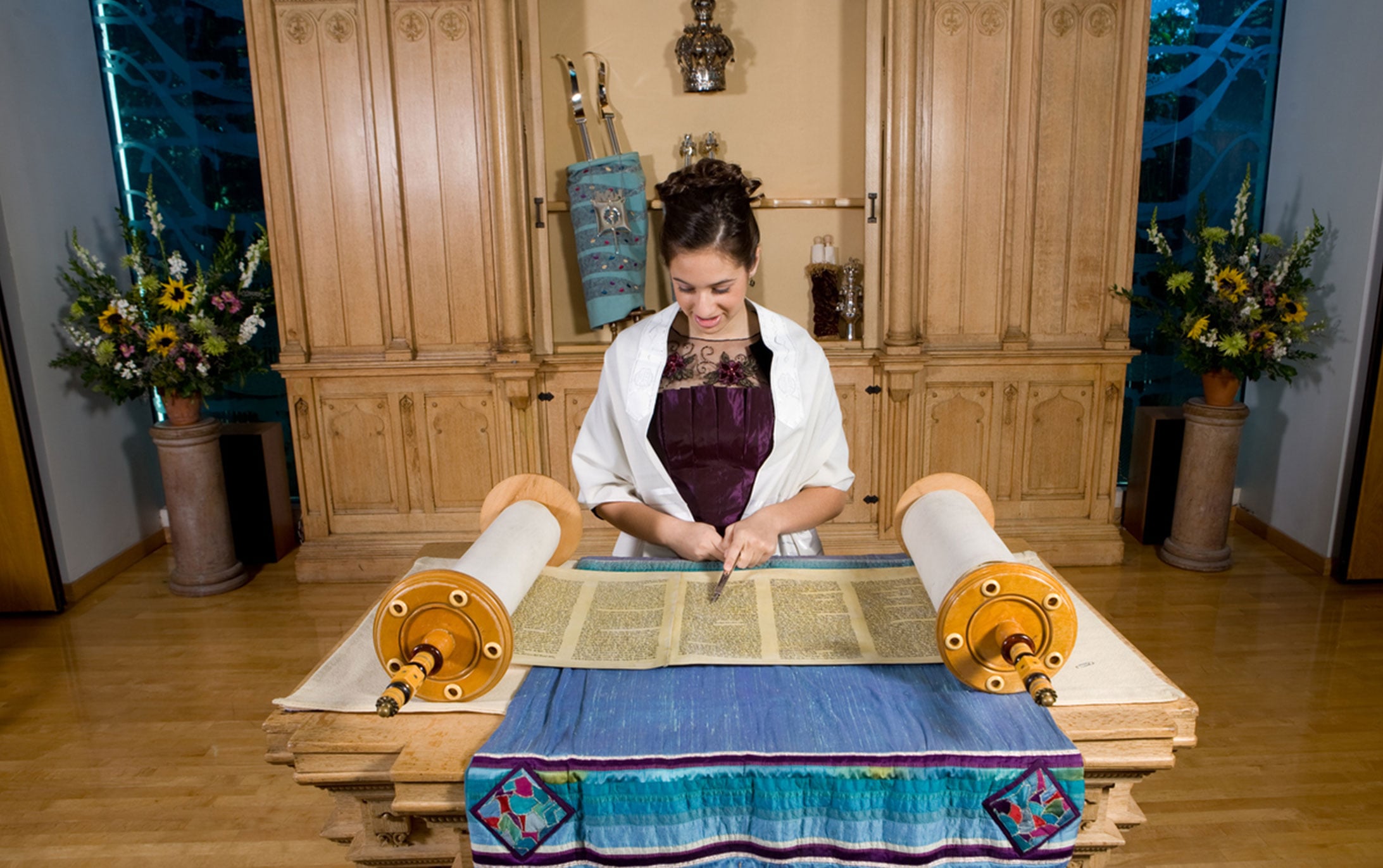
On the day of the B’nai Mitzvah ceremony, your child will chant a portion of the Torah in Hebrew using a special melodic system called trope (also spelled trop) or cantillation. The Torah scroll contains only Hebrew letters with no vowels or musical notation, meaning that chanting correctly requires study, memory, and practice.
In addition to the Torah portion, most B’nai Mitzvah students chant the Haftarah: a related passage from the Prophets that thematically echoes or responds to the Torah portion. Each Haftarah has its own distinct trope melody.
A Note on Length
Depending on the week’s Torah portion and the family’s preferences, students may chant the entire portion, a significant excerpt, or a carefully chosen section. Rabbi Amy helps families select an appropriate scope for their child.
The Five Books of the Torah
- Bereishit (Genesis): The stories of creation, Adam and Eve, Noah, Abraham and Sarah, Isaac, Jacob, and Joseph. Rich with family drama, moral complexity, and the foundations of Jewish identity.
- Shemot (Exodus): Moses, the Exodus from Egypt, the Revelation at Sinai, the Ten Commandments, and the building of the Tabernacle.
- Vayikra (Leviticus): Laws of sacrifice, purity, holiness, and the priestly service. Themes of ethical living, justice, and caring for others.
- Bamidbar (Numbers): The Israelites’ journey through the desert. Stories of leadership, rebellion, census-taking, and the challenge of building community.
- Devarim (Deuteronomy): Moses’ farewell speeches before the Israelites enter the Promised Land. Themes of memory, legacy, and passing values to the next generation.
How Families Use the Torah Portion
The Torah portion becomes the lens through which your child prepares their B’nai Mitzvah D’var Torah speech. Rabbi Amy guides students through a structured exploration:
- What is this story really about? Looking beneath the surface narrative for deeper themes.
- Who are the characters, and what choices do they make? Understanding moral agency and consequence.
- What values does this portion teach? Identifying the Jewish wisdom woven through the text.
- How does this connect to my life? Finding the personal story that bridges ancient text to present experience.
The result is a D’var Torah that is authentically the child’s own, rooted in thousands of years of wisdom, but alive with personal meaning.
Sample Torah Portions and Their Themes
Lech Lecha (Go Forth), Genesis 12 to 17
Abraham is called to leave everything familiar and journey into the unknown. Themes: courage, identity, listening to an inner calling, faith in the face of uncertainty. Beautiful for a child who has navigated a big change or discovered a new passion.
Vayechi (And He Lived), Genesis 47 to 50
Jacob blesses his children before his death, giving each one a unique blessing. Themes: family legacy, what we pass down to the next generation, the blessing of being truly known. Often resonates deeply with families who have experienced loss.
Mishpatim (Laws), Exodus 21 to 24
A dense collection of civil and ethical laws governing how we treat one another. Themes: justice, fairness, protecting the vulnerable, the relationship between freedom and responsibility. Rich for a child with a strong sense of justice.
Kedoshim (Holy Ones), Leviticus 19 to 20
Contains the commandment “Love your neighbor as yourself.” Themes: ethical living, treating others with dignity, the holiness found in everyday actions. A powerful B’nai Mitzvah Torah portion for any child.
What If My Child’s Portion Seems Difficult or Dry?
Every Torah portion, even those that appear technical, repetitive, or challenging, contains wisdom waiting to be discovered. Leviticus portions about sacrifices spark conversations about giving and letting go. Numbers census lists lead to discussions about being counted, seen, and valued. Genealogies open doors to questions about legacy and belonging.
There are no bad portions. There are only undiscovered ones. Rabbi Amy brings enthusiasm and deep knowledge to every text and has worked with families across Boca Raton, Delray Beach, and all of Palm Beach County through the full sweep of the Torah.
Find Your Child’s Parsha
Want to find out which Torah portion falls on your child’s 13th birthday? Contact The Neshamah Institute at niboca.org. We’ll identify your parsha, share its key themes, and help you begin to see why it might be the perfect portion for your child’s B’nai Mitzvah.
Every Portion Is the Right Portion
Rabbi Amy guides students and families to discover the personal meaning in any Torah text.
niboca.org · No membership required. Every family welcome.
About Rabbi Rader
Rabbi Amy Rader is the Founder and Executive Director of the Neshamah Institute in Boca Raton, a vibrant Jewish community offering meaningful Jewish education for kids, Bar and Bat Mitzvah preparation, High Holiday services, and inspiring Jewish events. Ordained by the Jewish Theological Seminary, Rabbi Rader brings over 25 years of experience helping families connect deeply with Judaism in modern, authentic ways.