
Posted on March 11, 2026 in Passover Resources
Passover for Beginners:
Everything You Need to Know Before Your First Seder
A Complete, Friendly Guide to Passover 2026 — No Prior Knowledge Required
by Rabbi Amy Rader • The Neshamah Institute
“Whoever has not said these three things on Passover has not fulfilled their obligation: Pesach, Matzah, and Maror.” — Mishnah Pesachim 10:5
Welcome. If you’re reading this, you’re probably about to attend your first Passover seder — or you’ve been to one and had no idea what was happening and want to understand it better before the next one. Either way, you’re in exactly the right place.
The Passover seder is one of the most remarkable traditions in the world. It’s part religious ceremony, part theatrical performance, part history lesson, part family dinner, and part children’s game — all happening at the same table, in the same evening, in roughly the same order it’s been happening for thousands of years.
It can also feel overwhelming if you don’t know the terrain. This guide is your map.
By the time you’re done reading, you’ll know what Passover is, why it’s celebrated, what to expect at a seder, what to eat, how to participate, and what to do when you’re not sure what to do. You’ll arrive at the table feeling prepared — and ready to enjoy one of the most meaningful meals you’ve ever been part of.
What Is Passover?
Passover — in Hebrew, Pesach — is the Jewish holiday commemorating the liberation of the Israelite people from slavery in ancient Egypt. The story is told in the Book of Exodus in the Hebrew Bible: how the Israelites were enslaved by Pharaoh, how God sent ten plagues upon Egypt to compel Pharaoh to let them go, and how the Israelites finally escaped — crossing the Red Sea into freedom.
Passover is observed for seven or eight days (depending on tradition), beginning at sundown on the 15th of Nisan in the Hebrew calendar. In 2026, the first seder falls on the evening of Saturday, April 1.
The name “Passover” refers to the final plague: the Angel of Death passing over the homes of the Israelites, which were marked with lamb’s blood on the doorposts, while striking the firstborn of Egypt. It is a name that carries the weight of the whole story: survival, distinction, the cost of freedom.
Why Does This Holiday Matter in 2026?
Passover is not merely a historical commemoration. Jewish tradition insists that in every generation, every person must see themselves as if they personally left Egypt. This is not a metaphor — it is an obligation. The seder is designed to make the ancient story feel immediate, personal, and unfinished.
In a world where people are still enslaved, still oppressed, still fleeing tyranny, the Passover story is not past tense. It is present tense. And the seder table is where every generation takes up the story and asks: what does this demand of me, now?
What Is a Seder?
The word seder means “order” in Hebrew — and the Passover seder is a precisely ordered ceremonial meal. It follows a script called the Haggadah (which means “the telling”), and it has 15 distinct steps, from the first blessings over wine all the way to songs sung late into the night.
The seder accomplishes something extraordinary: it makes a 3,000-year-old story feel alive in the room. It does this through food, ritual, song, questions, and storytelling — not passive listening, but active participation.
The 15 Steps — A Quick Overview
Here is what happens at a seder, in order. Don’t worry about memorizing this — just read it once so the evening makes sense as it unfolds.
- Kadesh — The first cup of wine is poured and a blessing (Kiddush) is recited, sanctifying the evening.
- Urchatz — Hands are washed without a blessing. A ritual of preparation and intention.
- Karpas — A vegetable (usually parsley) is dipped in salt water. The salt water represents the tears of the enslaved Israelites.
- Yachatz — The middle of three matzot (plural of matzah) is broken. Half is hidden as the Afikomen — to be found later.
- Maggid — The telling of the Exodus story. The longest section, including the Four Questions, the Four Children, the Ten Plagues, and Dayenu.
- Rachtzah — Hands are washed again, this time with a blessing, before eating.
- Motzi Matzah — The blessing over the matzah, and eating it.
- Maror — Bitter herbs (usually horseradish) are eaten to taste the bitterness of slavery.
- Koreich — The Hillel Sandwich: matzah, bitter herbs, and sweet charoset eaten together.
- Shulchan Oreich — The festive meal. This is when you eat!
- Tzafun — Finding the hidden Afikomen. The children hold it for ransom.
- Bareich — Grace after meals, and the third cup of wine.
- Hallel — Psalms and songs of praise. The fourth cup of wine.
- Nirtzah — The seder is accepted and complete. “Next year in Jerusalem!”
The whole seder, from start to meal, typically takes 1.5 to 2.5 hours depending on the family. Some families go very fast; some go deep into discussion. Either is fine.
The Seder Plate: What You’ll See in the Middle of the Table
The seder plate (ke’arah) holds the symbolic foods of the Passover story. You’ll see it at the center of the table — often a special, beautiful plate. Here’s what’s on it and why:
Maror — Bitter Herbs
Usually freshly grated horseradish, though romaine lettuce is also traditional. It represents the bitterness of slavery. When you eat it, you will feel it. That’s the point — to taste, even briefly, what bitterness feels like in the body.
Charoset — Sweet Paste
A mixture of apples, nuts, wine, and spices (in Ashkenazi tradition) or dates, figs, and almonds (in Sephardic tradition). It represents the mortar the enslaved Israelites used to build Pharaoh’s cities. Its sweetness is deliberate — the memory of sweetness within hard labor. You’ll eat it with the bitter herbs, which is the whole point: bitter and sweet together.
Karpas — Vegetable
Usually parsley, celery, or potato. It is dipped in salt water at the beginning of the seder. The salt water represents tears. Dipping the vegetable — a sign of spring, of new life — in tears is one of the seder’s most poetic gestures.
Zeroa — Shank Bone (or Roasted Beet)
A roasted lamb shank bone, representing the Passover sacrifice offered in the Temple in Jerusalem. It is symbolic only — not eaten. Vegetarians and vegans often substitute a roasted beet, which visually evokes the same symbolism.
Beitzah — Roasted Egg
A hard-boiled egg, usually roasted or charred. It represents the festival sacrifice, and also the resilience of the Jewish people: like an egg, Jews grow harder under pressure. It is also a symbol of spring and new life.
Chazeret — Additional Bitter Herb
Often romaine lettuce, used in the Hillel Sandwich (Step 9). Some seder plates include this separately; others combine it with the maror.
The Orange — A Modern Addition
Many contemporary families add an orange to the seder plate as a symbol of the full inclusion of all people at the Jewish table — LGBTQ+ Jews, Jews of color, interfaith families, anyone historically on the margins. If you see an orange, it’s a beautiful statement about welcome.
What Is Matzah and Why Does Everyone Eat It?
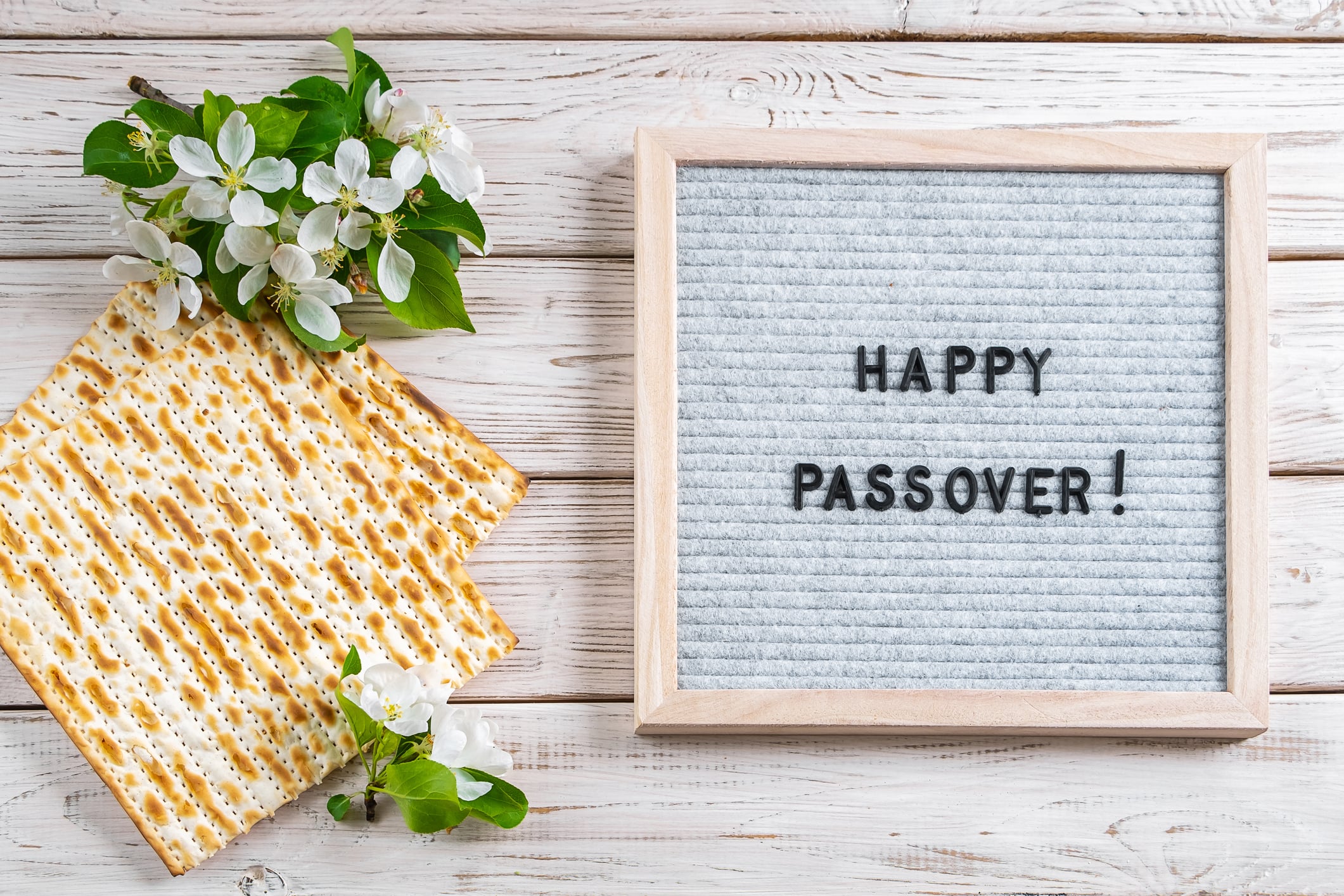
Matzah is unleavened flatbread — made of only flour and water, with no yeast or leavening agents. It is the central symbol of Passover, and for the entire week of the holiday, observant Jews eat no chametz (leavened bread or grain products).
The reason: when the Israelites fled Egypt, they left in such haste that there was no time for their bread to rise. They baked it flat and carried it on their backs into the desert. Matzah is simultaneously the bread of affliction (they ate it as slaves) and the bread of freedom (they ate it as they left).
For a first-timer: matzah tastes like a large, dry, slightly salty cracker. It is not exciting on its own. But eaten in context — with the story, with the bitter herbs, with charoset — it becomes something entirely different.
What to Expect: A First-Timer’s Guide to Participation
You Will Be Asked to Drink Four Cups of Wine
The four cups represent the four expressions of redemption in the Book of Exodus. Each cup is drunk at a specific point in the seder. Grape juice is always available as an alternative, and no one will watch or judge how much you drink.
Someone Will Ask Four Questions
One of the most beloved seder traditions is Mah Nishtanah — the Four Questions — traditionally asked by the youngest person at the table. The questions all ask some version of “Why is this night different from all other nights?” If you are the youngest, you may be asked to read them. Don’t panic — they’re printed in the Haggadah, and everyone will sing along.
There Will Be a Lot of Hebrew
Most Haggadot include both Hebrew and English transliteration and translation. You don’t need to know Hebrew to participate. Follow along in English. Many families read sections aloud together; others take turns. No one will quiz you.
Children Will Steal Something
The Afikomen — the hidden half of the middle matzah — is traditionally stolen by the children and held for ransom. The seder cannot be completed without it. This is intentional: the children must be bribed back into attention. It is one of the most joyful, chaotic moments of the evening.
There Will Be Songs
Dayenu, Chad Gadya, and Echad Mi Yodea are among the most beloved Passover songs. They are repetitive, sometimes silly, and sung with great gusto. You don’t need to know the words — just clap along to Dayenu (“it would have been enough”) and you’ll fit right in.
What to Do When You’re Not Sure
Follow the lead of the person sitting next to you. Ask questions — questions are the entire point of the seder. If you’re confused about something, say so: “Can you explain what we’re doing right now?” is not just acceptable at a Passover seder, it is the most Jewish thing you can possibly say.
A Few Things Worth Knowing Before You Arrive
Dress comfortably: The seder is a long evening. You’ll be sitting at a table for two or more hours before the meal. Dress nicely — it’s a holiday — but prioritize comfort.
Arrive on time: The seder begins at sundown. Arriving late means missing the ritual context that makes the meal meaningful. Plan to be there before the candles are lit.
Bring something: It’s customary to bring wine, flowers, or a food gift. Flowers are always welcome. If bringing food, check whether the host keeps kosher for Passover — some families have strict restrictions on outside food during the holiday.
Ask before the evening: If you have questions about what to expect, it’s completely appropriate to ask your host in advance: “Is there anything I should know before I come?” Most hosts will be delighted you asked.
Be present: Put your phone away. The seder is one of the most intentional shared experiences in the Jewish calendar. Showing up fully — curious, attentive, willing to be moved — is the greatest gift you can bring.
“In every generation, each person is obligated to see themselves as if they personally left Egypt.” — Passover Haggadah
Tonight, you are part of that story too. Welcome to the table.
— Rabbi Amy Rader, The Neshamah Institute
About Rabbi Amy Rader & The Neshamah Institute
Rabbi Amy Rader is the founder and Senior Rabbi of The Neshamah Institute, a synagogue without walls serving Boca Raton, Delray Beach, and greater Palm Beach County, Florida. Neshamah specializes in making Jewish tradition accessible, meaningful, and genuinely welcoming for people at every level of Jewish knowledge — first-timers, curious seekers, unaffiliated Jews, and anyone who wants to experience the richness of Jewish life without barriers or obligations.
Curious about Passover — or about Jewish community in South Florida?
You’ve come to the right place. The Neshamah Institute hosts beginner-friendly Passover programming, Shabbat experiences, and ongoing Jewish learning — all designed for people who are new to the tradition, returning to it, or just want to explore. No membership required. No prior knowledge assumed. Visit niboca.org or reach out directly — Rabbi Amy personally responds to every message.
 Serving Boca Raton, Delray Beach & Greater Palm Beach County, Florida
 niboca.org
 info@niboca.org
 Follow us: @neshamah.institute
© The Neshamah Institute. All rights reserved.
About Rabbi Rader
Rabbi Amy Rader is the Founder and Executive Director of the Neshamah Institute in Boca Raton, a vibrant Jewish community offering meaningful Jewish education for kids, Bar and Bat Mitzvah preparation, High Holiday services, and inspiring Jewish events. Ordained by the Jewish Theological Seminary, Rabbi Rader brings over 25 years of experience helping families connect deeply with Judaism in modern, authentic ways.