
Posted on April 23, 2026 in High Holy Day Guides
What Is the Shofar? The Ancient Call of the New Year
I have heard the shofar blown hundreds of times. I know exactly what is coming — the notes, the rhythm, the sequence. And still, every single time, it does something to me that I cannot entirely explain.
It is not beautiful the way a melody is beautiful. It does not resolve the way music resolves. It is raw and ancient and slightly unpredictable, even in the hands of a skilled player. And yet people who have heard it once tend to remember it for the rest of their lives.
This is a guide to the shofar — what it is, what it does, and why a ram’s horn has been at the center of Jewish life for over three thousand years.
What Is a Shofar?
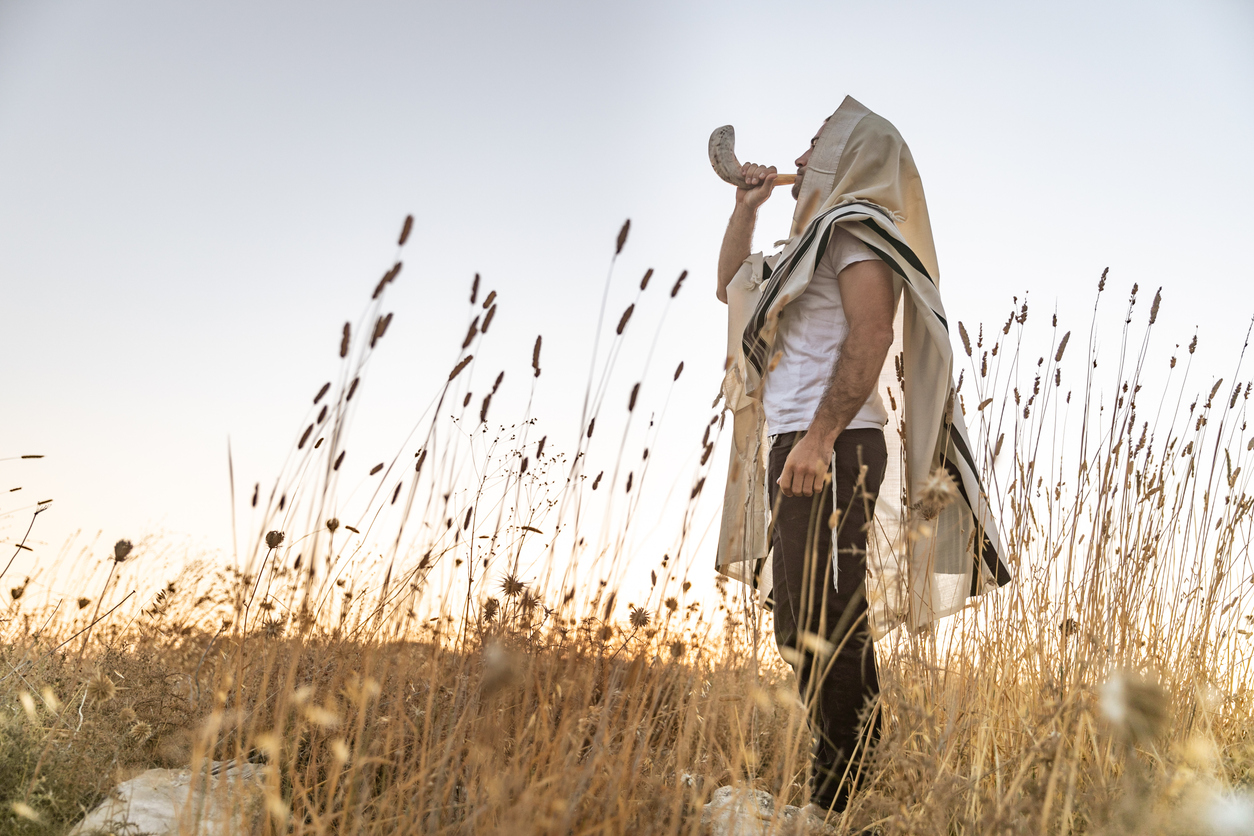
A shofar is a musical instrument made from the horn of a kosher animal, most commonly a ram. It is one of the oldest instruments in human history, and the Torah commands its use on Rosh Hashanah. The commandment appears in the book of Leviticus: In the seventh month, on the first of the month, there shall be a rest for you, a remembrance with shofar blasts, a holy convocation.
Unlike most instruments, the shofar is not hollowed and fitted with a mouthpiece — it is simply cleaned and shaped to create the natural horn through which air is blown directly. The sound it produces is therefore organic and slightly variable, which is part of what gives it its distinctive quality. No two shofar blasts sound exactly alike.
The curved shape of the shofar is considered significant by the rabbis: as the shofar bends, so should our hearts bend in humility and sincerity.
The Four Calls of the Shofar
The shofar is not blown randomly — there are four specific calls, each with its own character and meaning:
Tekiah
One long, clear, unbroken blast. The word tekiah means a firm blast. It is the call of attention — the sound that says: wake up, something important is happening. Every shofar sequence begins with a tekiah.
Shevarim
Three medium broken blasts, each about a third the length of a tekiah. The word shevarim means broken. The rabbis associated this sound with the sound of weeping — specifically the wavering, uncertain cry of someone in the grip of grief. It is the sob in the middle of the shofar service.
Teruah
Nine short, rapid staccato blasts. Where shevarim is a wavering cry, teruah is an alarm — urgent, insistent, demanding a response. The tradition debates the exact rhythm of teruah, and different communities have slightly different customs for how it is blown.
Tekiah Gedolah
One very long sustained blast, held as long as the player can manage. Tekiah gedolah means the great tekiah. It comes at the conclusion of the full shofar service and carries the sense of resolution — the held note after the crying and the alarm, the long exhale at the end of the work. When the tekiah gedolah sounds at the conclusion of Neilah as Yom Kippur ends, the entire congregation often responds with spontaneous sound.
Why Is the Shofar Blown?
The Torah commands the shofar without extensive explanation, which is actually quite unusual — most commandments come with a rationale. Maimonides, who generally preferred rational explanations for religious practice, wrote about the shofar somewhat unusually. He said that even though the commandment is a divine decree that we follow simply because it is commanded, there is a hint in it: Wake up, sleepers, from your sleep. Examine your deeds and return to God.
The rabbis offered many layers of meaning for the shofar across Jewish history. The shofar recalls the ram that was sacrificed in place of Isaac at the Akeidah, the binding story read on Rosh Hashanah morning. It recalls the shofar blast at Mount Sinai when the Torah was given. It evokes the shofar of the messianic era, when peace will finally be established.
But the most immediate and practical purpose, as Maimonides suggests, is the simplest: the shofar wakes us up. It breaks through the insulation of ordinary life and demands presence. It asks something of us before we have had time to construct our defenses.
When Is the Shofar Blown?
During Elul, the month before Rosh Hashanah, it is traditional to blow the shofar each morning as a daily call to preparation. This practice creates a month-long drumbeat leading up to the Days of Awe.
On Rosh Hashanah, the shofar is blown during the Torah service and throughout the Musaf additional service — a total of 100 blasts over the course of the morning. The specific sequences are prescribed in Jewish law and alternated in a particular pattern.
The shofar is not blown on Shabbat, even when Rosh Hashanah falls on a Saturday — a ruling that goes back to the Talmudic period and reflects the sanctity of Shabbat rest.
At the conclusion of Yom Kippur, at the very end of the Neilah service, the shofar is blown one final time — a single tekiah gedolah that signals the close of the holiest day of the year and the lifting of the fast.
The Shofar at Neshamah
Neshamah’s High Holy Day services include the full shofar service led with the care and intention this ancient practice deserves. For many people who attend Neshamah for the first time, the shofar moment is the one they talk about afterward — the unexpected emotional response, the sense of being called to something they cannot quite articulate.
Come and hear it for yourself. All services are available in person and via livestream. All attendees must pre-register in advance, and professional security is present at every service.
Reserve your seat at niboca.org/high-holy-days/
About Rabbi Rader
Rabbi Amy Rader is the Founder and Executive Director of the Neshamah Institute in Boca Raton, a vibrant Jewish community offering meaningful Jewish education for kids, Bar and Bat Mitzvah preparation, High Holiday services, and inspiring Jewish events. Ordained by the Jewish Theological Seminary, Rabbi Rader brings over 25 years of experience helping families connect deeply with Judaism in modern, authentic ways.