
Posted on April 22, 2026 in Wedding Guides
Mazel Tov! If you are planning a Jewish wedding and wondering what the ceremony actually involves, what all those beautiful traditions mean, and how to make it feel deeply personal and spiritually meaningful, this guide is for you.
Over the years I have had the privilege of officiating at Jewish weddings for couples of all backgrounds, including interfaith couples, LGBTQ+ couples, couples who grew up deeply immersed in Jewish life, and couples who are just beginning to explore what Judaism means to them. What every couple has in common is the desire for a wedding ceremony that reflects who they truly are while honoring something ancient, beautiful, and profound.
This guide walks you through every element of a Jewish wedding, from the months of preparation to the ceremony itself to the celebration that follows. My hope is that you will come away not just informed but genuinely excited about the sacred journey ahead.
What Makes a Wedding Jewish? The Essential Elements
A Jewish wedding is not simply a ceremony with a rabbi present. It is a richly layered ritual that weaves together legal covenant, spiritual blessing, communal witness, and ancient symbolism. Here are the core elements that give a Jewish wedding ceremony its depth and distinctiveness.
The Chuppah
The chuppah, the wedding canopy, is the most recognizable symbol of a Jewish wedding. Open on all four sides, it represents the home the couple is building together: welcoming, open to guests, and rooted in hospitality just as Abraham and Sarah’s tent was open to all who passed. The chuppah can be a tallit, decorated fabric, flowers, or a beloved family heirloom. Standing beneath it, surrounded by loved ones, the couple is literally held up by their community.
The Ketubah
The ketubah is the Jewish marriage contract, both a legally binding document in Jewish law and a work of art. Dating back over two thousand years, it outlines the couple’s commitments to each other. We will work together to choose or customize text that reflects your values, and select artwork that speaks to you as a couple. The ketubah is signed by two witnesses before or during the ceremony and will hang in your home as a beautiful reminder of your vows.
The Ring Exchange
The ring exchange is the central legal act of a Jewish wedding. Traditionally, rings are simple, unadorned bands, a perfect circle representing endless love and commitment. As the ring is placed on the partner’s finger, each partner recites a declaration of consecration. This single moment creates the marriage bond in Jewish law.
The Sheva Brachot (Seven Blessings)
The sheva brachot, or seven blessings, are the spiritual heart of the ceremony. These ancient blessings place the couple’s love within the grand sweep of Jewish history and human experience, moving from cosmic creation all the way to the intimate union of two people. They are often shared among honored family members and friends, making them a beautiful way to include the people who matter most.
Breaking the Glass
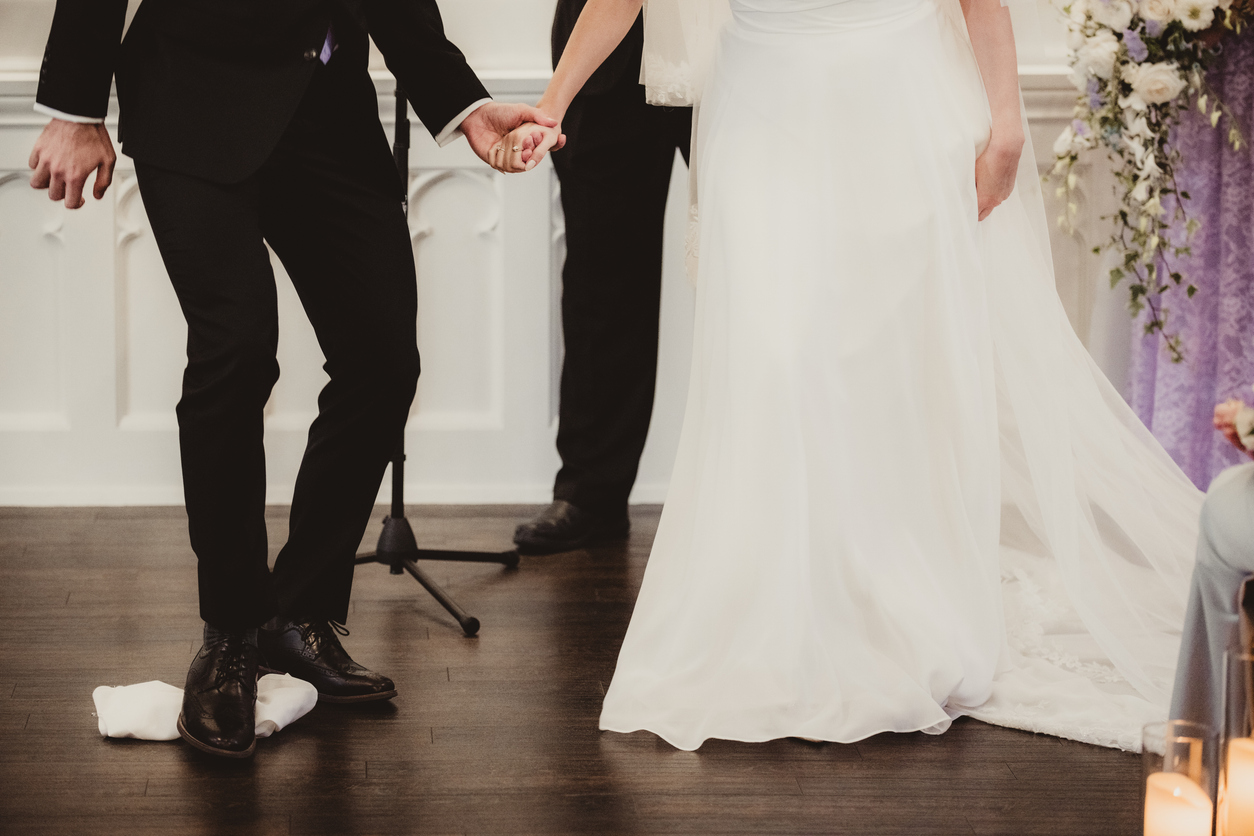
The ceremony concludes with the breaking of the glass, one of the most powerful moments in Jewish life. This act holds multiple layers of meaning: we remember the destruction of the Temple even in our greatest joy; we acknowledge that life holds both celebration and sorrow; and we recognize that every relationship is fragile and must be handled with care. The sound of shattering glass releases the ceremony’s sacred tension into pure, exuberant celebration. And then everyone shouts Mazel Tov.
Before and During: What to Expect on Your Wedding Day
Jewish wedding days are full and beautiful. Here is a sense of how the day typically unfolds.
The Bedeken (Veiling Ceremony)
Before the ceremony begins, we often hold a bedeken, the veiling of one partner by the other. This tender moment, recalling Rebecca veiling herself before meeting Isaac, affirms that inner beauty matters most. Family and friends surround the couple with blessings, often singing and dancing. It is one of my favorite moments of the entire wedding day.
The Processional
In Jewish tradition, parents escort the couple to the chuppah, symbolizing that marriage is a union of families, not just two individuals. Grandparents, siblings, and the wedding party also process. The order is flexible and can be customized to honor your family’s unique structure.
Yichud: Your First Moments as a Married Couple
Immediately after the ceremony, the two of you spend a few private minutes together in a quiet room. Yichud means ‘togetherness.’ This creates your first moments as a married couple, away from the eyes of the world. Traditionally, couples break their wedding day fast here with light refreshments. This pause allows you to absorb the magnitude of what just happened before rejoining your celebration.
Making It Yours: Personal Vows, Readings, and More
One of the things I love most about officiating Jewish weddings is the wide range of what a ceremony can be. Jewish law establishes the essential elements, and within that framework there is extraordinary room for personalization.
Many couples choose to include personal vows or statements in addition to the traditional ring exchange. This can be a poem, a letter, promises you have written to each other, or reflections on your shared journey. I encourage you to speak from the heart. We will work together in our meetings to craft words that feel authentic and meaningful.
Friends and family can be honored throughout the ceremony as well, by carrying the chuppah, chanting one of the seven blessings, reading a poem, or offering a personal reflection. These moments of inclusion transform your wedding from a performance into a true community celebration.
Jewish Wedding Traditions at the Reception
The celebration that follows is every bit as meaningful as the ceremony itself. Jewish receptions are famous for their joy, and for good reason. Here are some traditions that many couples include.
The Hora
The hora is the iconic circle dance, often performed to ‘Hava Nagila’ or other joyful Jewish music. Guests hold hands and dance in concentric circles around the couple, and at the climax, the couple is lifted on chairs above the crowd. This exuberant tradition celebrates the couple’s joy and brings absolutely everyone onto the dance floor together.
Hamotzi and Birkat Hamazon
Before the meal, the blessing over challah sanctifies the reception and reminds everyone that this gathering is infused with holiness. After dinner, Grace After Meals may be recited, often followed by a shortened version of the seven blessings. Different friends and family members can be honored with each blessing, extending the ceremony’s sacredness throughout the entire evening.
After the Wedding: Building Your Jewish Home Together
A Jewish wedding is the beginning of a lifelong conversation. In the week following the wedding, Jewish tradition calls for seven festive meals, the sheva brachot week, during which the seven wedding blessings are recited again in the presence of loved ones. This beautiful custom extends the celebration and supports the couple as they begin their married life.
Beyond that week, marriage marks the creation of your own bayit ne’eman b’Yisrael, a faithful Jewish home. I am here to help you explore what that means for your family: Shabbat dinners, a mezuzah on your doorpost, tzedakah, holiday observance, or whatever practices and values will make your home a place of warmth and spiritual meaning.
Who I Marry: An Inclusive Approach to Jewish Weddings
At The Neshamah Institute, I warmly welcome couples of all backgrounds. I perform Jewish weddings for interfaith couples, LGBTQ+ couples, and couples at every level of Jewish connection and observance. Jewish tradition celebrates love in all its forms, and I am honored to help every couple create a ceremony that is authentic to both Jewish tradition and their own identity.
If you have questions about what your specific situation might look like, please do not hesitate to reach out. No question is too basic, and no background is unwelcome.
Ready to Begin? Here Is How to Start
I work with a small number of couples each year so that every ceremony receives the time and care it deserves. Our work together will include regular meetings to get to know each other, conversations about building a Jewish home, help choosing your ketubah text and artwork, and everything you need to feel fully prepared and genuinely excited for your wedding day.
To download our complete Jewish Wedding Guide, click here. To begin a conversation about your ceremony, reach me directly at rabbi@niboca.org or call 561-368-1199.
May your love continue to grow. May your home be filled with joy and peace. May you build a life of blessing together. Mazel Tov!
About Rabbi Rader
Rabbi Amy Rader is the Founder and Executive Director of the Neshamah Institute in Boca Raton, a vibrant Jewish community offering meaningful Jewish education for kids, Bar and Bat Mitzvah preparation, High Holiday services, and inspiring Jewish events. Ordained by the Jewish Theological Seminary, Rabbi Rader brings over 25 years of experience helping families connect deeply with Judaism in modern, authentic ways.