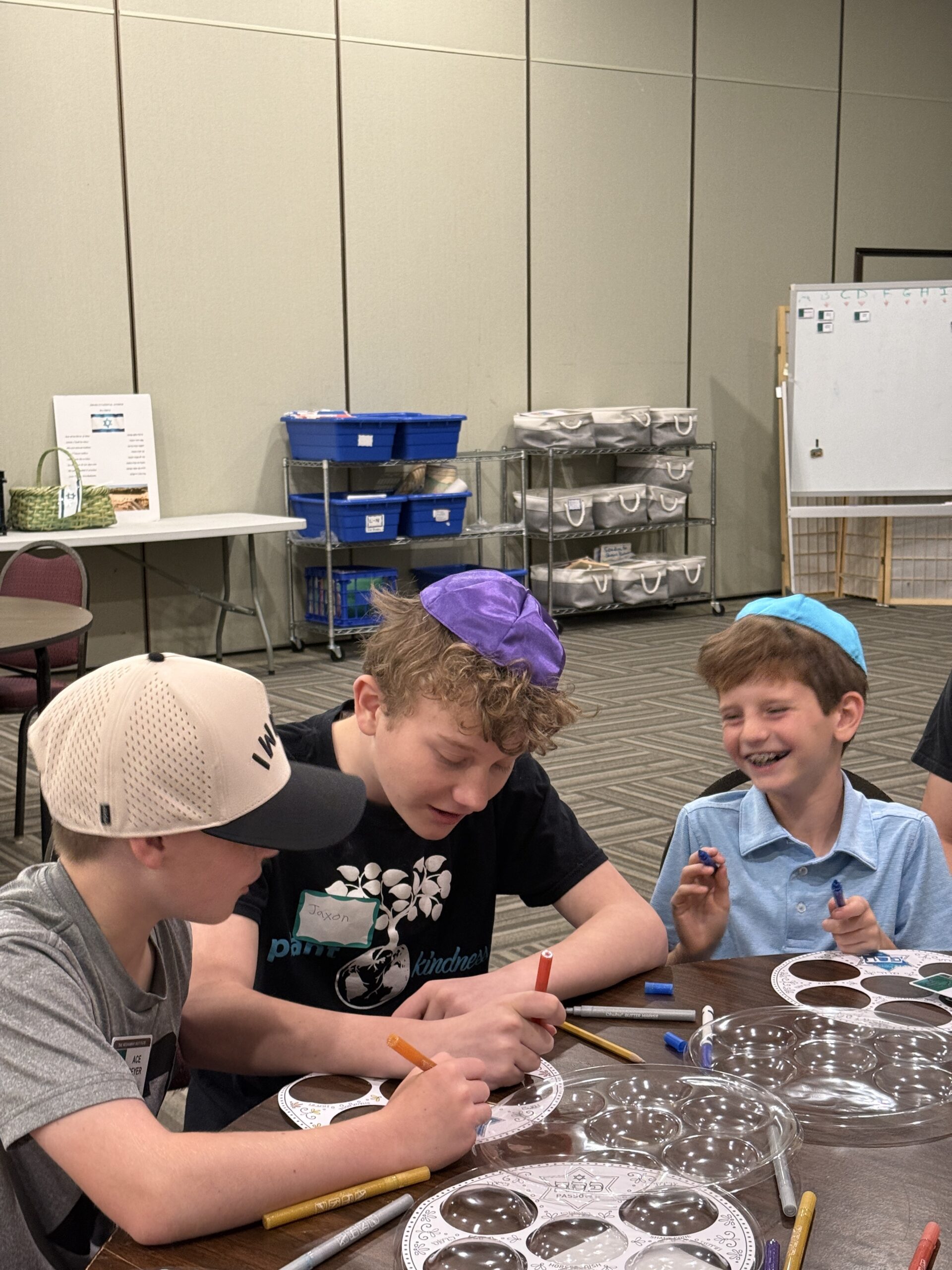
Passover is a holiday that was made for children. The seder is designed to spark curiosity, invite questions, and draw the youngest participants right into the heart of the story. This Sunday, our Hebrew school students did exactly that. They did not just learn about Passover. They tasted it, sang it, and felt it.
Setting the Stage with Song
We kicked off the morning with music, and the energy in the room said everything. Students reviewed the songs they will hear and sing at their own family seders, from the rousing call of “Dayenu” to the beloved search for Elijah. There is something powerful about a roomful of children belting out words that Jewish kids have been singing for generations. The melodies are ancient, but the voices are brand new, and together they remind us why we keep telling this story year after year.
Knowing the songs ahead of time makes the seder table feel like familiar ground. When children can join in and follow along, the night transforms from something that happens around them into something they are genuinely part of.
Building an Edible Seder Plate
Then came the highlight of the morning: making their very own edible seder plates.
The melodies are ancient, but the voices are brand new, and together they remind us why we keep telling this story year after year.
Each student assembled the symbolic foods of the seder using real ingredients, building a plate they could hold, explore, and yes, eat. They scooped charoset, pressed parsley into place, and considered the meaning behind each item as they went. There is no better way to learn than through your hands, and no better way to remember than through your taste buds.
Here is a quick reminder of what lives on the seder plate and why:
Maror (Bitter Herbs)
The bitterness of slavery. We eat it so we do not forget.
Charoset
The mortar the enslaved Israelites used to build. Sweet, because even in hard times, there is sweetness woven in.
Karpas (Parsley)
Dipped in salt water to represent the tears of our ancestors, and also the hope of spring and new beginnings.
Zeroa (Shank Bone)
A reminder of the Passover sacrifice and the outstretched arm of God that led our people out of Egypt.
Beitzah (Roasted Egg)
A symbol of the cycle of life and the resilience that carries us through grief and hardship.
Chazeret
A second bitter herb, often romaine lettuce, reminding us that oppression can begin gently before it grows harsh.
Each food is a doorway into conversation, and our students walked through all of them.
What Does Passover Really Mean?
With their plates in hand, we turned to the deeper question: what is this holiday actually about?
Passover is the story of the Israelites leaving slavery in Egypt, but it is also something more personal. Every year, we are asked to see ourselves as if we, too, left Egypt. Not as a history lesson, but as a living spiritual practice. We look at our own lives and ask: where are we still in narrow places? What does it mean to move toward freedom?
Our students brought their own honest answers to that question. Some talked about things that feel hard or scary. Some talked about what freedom means to them. The conversation was exactly what Passover is supposed to produce: young people grappling with big ideas and finding that the ancient story has something real to say to their lives right now.
Sending Them Home Ready
Every child left this morning with a seder plate they made themselves, a handful of songs in their hearts, and something to bring to the table this week, literally and spiritually.
That is the goal of Jewish education at its best: not information transferred, but meaning made. Our students are not just prepared for Passover. They are ready to be part of it.
We wish all of our families a meaningful, joyful, and liberating Pesach. Chag Sameach!
Is Hebrew School Right for Your Family? Neshamah Institute offers Hebrew school for grades K through 5, with a warm, welcoming environment for every kind of Jewish family. No membership. No dues. Just community. Visit niboca.org/hebrew-school to learn more. |