
Posted on March 17, 2026 in Passover Resources
“Return to me, and I will return to you.” – Malachi 3:7
Maybe it’s been five years. Maybe it’s been twenty-five. Maybe you drifted away gradually — college, a move, a relationship, a loss of faith, a community that didn’t feel like yours — or maybe there was a sharper break, a moment when you decided that Judaism wasn’t for you, or wasn’t for the person you were becoming.
And now Passover is coming, and something is pulling you back to the table.
That pull has a name in Jewish tradition. It’s called teshuvah — often translated as “repentance,” but more precisely meaning “return.” Not return to who you were before. Return to who you are, without the layers that accumulated in the years away. Teshuvah is the tradition’s insistence that the door is always open, that no one is ever too far gone, that the table is always being set.
This article is for you. Not to tell you what you should believe or how Jewish you need to be. Just to say: if you’re wondering whether Passover still belongs to you, it does. And here’s how to come back to it in a way that feels honest, gentle, and real.
Why Passover Is the Best Holiday to Come Back To
Of all the Jewish holidays, Passover is the most forgiving entry point for someone returning after years away. Here’s why:
- It requires no synagogue attendance, no prayer book knowledge, and no Hebrew literacy. It happens at a table in a home.
- It is structured around questions — not answers, not declarations of belief, not tests of observance. Questions. You can come with all of your uncertainty and it will be welcomed.
- It tells a story that speaks to anyone who has ever been in a narrow place and found their way out. Mitzrayim — Egypt — literally means “the narrow place.” Many people who have been away from Judaism recognize that word in their own experience.
- It is communal and familial — it’s about gathering, about memory, about the people around the table. You don’t have to believe anything in particular to feel the warmth of that.
What Kept You Away — and What Judaism Actually Says About That
“I Stopped Believing”
Judaism has a complicated relationship with belief. Unlike many faith traditions, it does not require theological conformity as a condition of belonging. The Talmud is full of arguments, doubts, heretics, and questioners who remained deeply within the tradition. The great Hasidic masters wrote about faith and doubt existing in the same breath.
The Passover seder is one of the most agnostic-friendly Jewish rituals there is. It is primarily a story about human dignity and political liberation — you can engage with it fully without settling every theological question. Many secular and cultural Jews observe Passover with complete authenticity and zero supernaturalism. The tradition has room for that.
“My Jewish Identity Felt Forced on Me”
Many people who grew up in Jewish households have complicated feelings about a religious identity they didn’t choose. The seder as an obligation, the Hebrew school as a chore, the guilt-laden family dynamics — all of it can make Judaism feel like something done to you rather than something you chose.
Coming back as an adult means coming back on your own terms. You get to decide what Passover means to you. You get to take what resonates and leave what doesn’t. That is, in fact, a deeply Jewish approach — the tradition has always been interpreted and reinterpreted by each generation.
“I Don’t Feel Jewish Enough”
This is perhaps the most common reason people stay away, and the saddest — because the feeling of not being Jewish enough is almost never accurate. It is usually a story we absorbed from external voices: a community that made us feel like outsiders, a standard of observance we couldn’t meet, a Jewish identity defined by things we didn’t have.
Here is what the Passover Haggadah actually says: “Even if all of us were wise, all of us discerning, all of us knowing the Torah — it would still be our obligation to tell the story of the Exodus.” Even the wisest, most knowledgeable person still needs the seder. The story is for everyone, regardless of how much they know.
“My Life Changed and Judaism Didn’t Come With It”
Divorce, remarriage, interfaith relationship, coming out, a move to a new city, a shift in politics or values — any of these can create distance from a tradition that seemed to belong to a previous version of you. But Jewish identity is remarkably elastic. It has survived exile, persecution, assimilation, and transformation for thousands of years. It can survive your life changes too.
The question isn’t whether the Judaism you grew up with has room for you. The question is whether you can find a Judaism that does. And in 2026, that Judaism is easier to find than it has ever been.
How to Come Back: Practical and Emotional Guidance
Start Small — a Seder Is Enough
You don’t have to recommit to anything. You don’t have to join a synagogue, attend services, or change your life. Coming back to a seder — even just one, even just for an hour — is a complete act. It is enough.
The tradition has a concept called Kol Yisrael arevim zeh bazeh — all Jews are responsible for one another. You are part of a people whether or not you show up to every meeting. Showing up tonight is enough.
Let Yourself Feel Whatever You Feel
Coming back after years away can bring up a complicated mix of emotions — nostalgia, grief, guilt, gratitude, ambivalence, even anger. All of it is welcome at the Passover table. The seder holds bitterness and sweetness in the same ritual, in the same meal. It was designed for complicated feelings.
If you cry unexpectedly during a song you haven’t heard in decades, that’s the tradition doing its work. If you feel defensive or resistant, that’s okay too. Come as you are.
Find a Table That Feels Like Yours
If your family’s seder doesn’t feel safe — if returning to your family of origin is too complicated, too painful, or simply not possible — find another table. A friend’s seder, a community seder, a synagogue’s open seder. Many communities specifically host welcoming seders for people who are returning, exploring, or coming for the first time.
The invitation at the start of every seder — “All who are hungry, come and eat” — is not just about physical hunger. It is an invitation to everyone who is hungry for belonging, for meaning, for a place to sit and remember who they are.
You Don’t Have to Agree With Everything
You can come back to the Passover table without signing a statement of belief. You can find the Exodus story mythically true without finding it literally true. You can love the ritual without agreeing with every theology it implies. You can be Jewish on your own terms.
In fact, the tradition’s greatest strength is precisely its capacity to be argued with. The Talmud is a record of 1,500 years of rabbis disagreeing with each other. Your questions, your doubts, and your critiques are not obstacles to Jewish life — they are Jewish life.
Give It a Full Evening
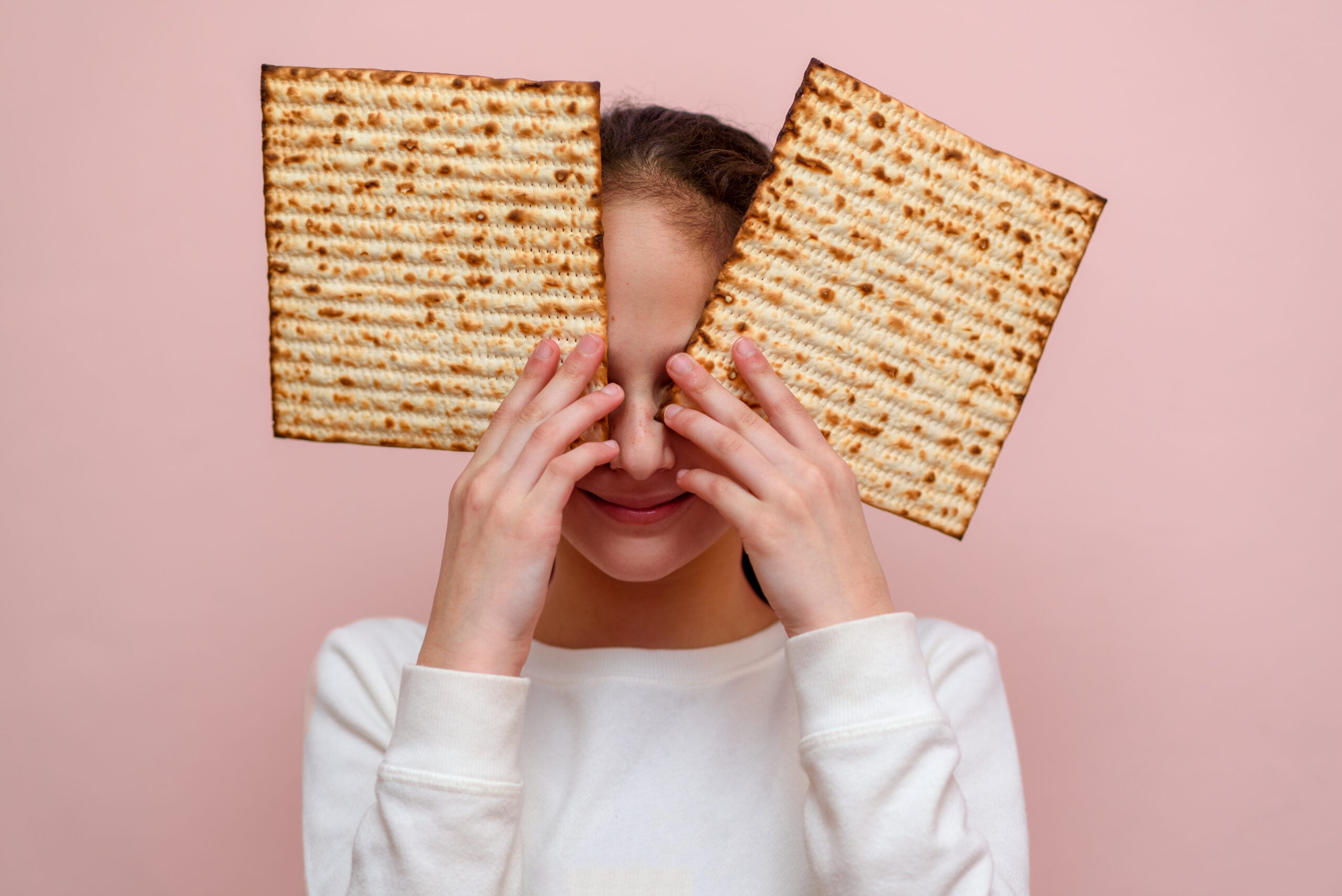
If you’re returning to a seder after years away, try to give it a full evening — not just the meal, but the ritual too. Sit with the matzah. Taste the salt water. Listen to Dayenu. Give the tradition a chance to work on you before you decide what you think of it.
Many people who return to the seder after years away describe the same experience: something they thought was gone was still there, waiting quietly, in the words and the songs and the familiar smell of the holiday. You may be surprised by what comes back.
A Passover Teaching for the Person Coming Back
There is a teaching about the Hebrew letter shin (שׁ) — the first letter of the word Shabbat, and one of the most ancient symbols in the Jewish tradition. The letter has three branches rising from a single base. The rabbis teach that this represents the three dimensions of Jewish life: memory of the past, presence in the now, and hope for the future.
When you come back to a Passover seder after years away, you are inhabiting all three at once. The memory of the seders you sat at as a child. The presence of sitting at a table tonight, uncertain and open. The hope — however tentative — that this tradition might still have something for you.
That is not a small thing. That is, in fact, the whole point of Passover.
“The heart of Jewish return is not a change of behavior. It is a change of direction — turning back toward what matters, toward who you are.” — Rabbi Jonathan Sacks z”l
Welcome back. We’ve been keeping a place for you.
— Rabbi Amy Rader, The Neshamah Institute
About Rabbi Amy Rader & The Neshamah Institute
Rabbi Amy Rader is the founder and Senior Rabbi of The Neshamah Institute, a synagogue without walls serving Boca Raton, Delray Beach, and greater Palm Beach County, Florida. Neshamah is a home for Jews who are returning, exploring, questioning, and rebuilding — a community built without barriers, without judgment, and without membership dues. If you’ve been away from Judaism and are wondering if there’s a place for you, there is.
Thinking about coming back to Jewish life? We’d love to be part of that journey.
The Neshamah Institute was created for exactly this moment — for the person who is returning after years away and needs a community that meets them where they are, with no pressure and no judgment. Passover is a beautiful place to begin. Visit niboca.org to learn about our upcoming programming and community, or reach out directly. Rabbi Amy personally responds to every message.
📍 Serving Boca Raton, Delray Beach & Greater Palm Beach County, Florida
🌐 niboca.org
📧 info@niboca.org
📱 Follow us: @neshamah.institute
© The Neshamah Institute. All rights reserved.
About Rabbi Rader
Rabbi Amy Rader is the Founder and Executive Director of the Neshamah Institute in Boca Raton, a vibrant Jewish community offering meaningful Jewish education for kids, Bar and Bat Mitzvah preparation, High Holiday services, and inspiring Jewish events. Ordained by the Jewish Theological Seminary, Rabbi Rader brings over 25 years of experience helping families connect deeply with Judaism in modern, authentic ways.